

Hosting Live Sporting Events: Sports Presenter Matthew Walker on Why Broadcast Experience Changes Everything
Sport creates the most demanding live event audiences in the world. They are passionate, knowledgeable, emotionally invested, and completely unforgiving of anything that feels inauthentic. A corporate conference audience will give a host the benefit of the doubt for the first ten minutes. A sporting audience makes its judgment in the first two. If the host does not belong in that room, everyone in it knows immediately.
That is why broadcast experience changes everything on a sports stage. Not because it makes a presenter more polished, though it does, but because it builds the specific kind of composure, instinct, and technical capability that live sporting events demand in ways that stage experience alone simply cannot replicate.
What sporting audiences expect that other audiences do not
A sporting audience expects the host to know the sport. Not at a surface level, not in the way that a well-researched brief can simulate, but genuinely and demonstrably. They expect the host to understand the significance of the moment, to reference the history where it matters, and to ask the questions of athletes and sporting figures that only someone with real knowledge would think to ask.
They also expect the host to match the energy of the room. Sport generates its own atmosphere, and the host's job is not to create that atmosphere but to channel it. That requires a completely different approach to a corporate conference or awards ceremony, where the host largely sets the emotional temperature of the room. At a sporting event, the room sets its own temperature and the host has to meet it.

Why Formula 1 is the ultimate preparation for live sporting event hosting
Of all the sporting environments Matthew Walker has worked in, Formula 1 is the one that demands the most from a presenter. The production values are extraordinary, the audiences are global, the subject matter is technically complex, and the pace of a live Grand Prix weekend leaves no room for hesitation or error. Presenting Formula 1 teaches you to process information at speed, to communicate with authority under pressure, and to hold an audience's attention in an environment where there is always something more spectacular happening just off camera.
Those skills transfer directly to a live sporting event stage. The composure required to hold a room between segments at a football club awards night, the technical fluency needed to interview a team principal or a world champion live in front of an audience, the instinct to know when to push a conversation further and when to let a moment breathe: all of these are skills that Formula 1 develops and that live sporting event hosting demands.

The Winter Olympics and what elite international sport requires
Covering the Milano Cortina Winter Olympics in Milan presented a different kind of challenge. The athletes Matthew Walker interviewed at the HPE Suite, including Olympic gold medallist Tara Lipinski and downhill Olympic skier Hedwig Wessel, were operating at the absolute pinnacle of world sport. Interviewing elite athletes at that level, in a live environment, in front of an audience that knows the sport deeply, requires a very specific preparation and a very specific kind of presence.
It requires the host to understand not just the athlete's achievements but the context of those achievements, the competitive landscape, the physical and mental demands of the sport, and the personal story behind the performance. A broadcast-trained sports presenter brings all of that to the interview as a matter of course. A generalist presenter, however confident, cannot.

Football, cricket, and boxing: three different rooms, one skill set
Matthew Walker has hosted live sporting events at Anfield for Liverpool FC, Stamford Bridge for Chelsea FC, St Mary's Stadium for Southampton FC, Goodison Park for Everton FC, the Kia Oval for the launch of The Viceroy 1977 featuring England international Chris Woakes, Inter Miami FC's stadium in Miami, and Charity Boxing Nights in Manchester for ten consecutive years. Each of those environments is completely different in atmosphere, audience, and expectation.
A football audience at a Premier League ground brings tribal passion and an intimate knowledge of the club's history. A cricket audience at the Kia Oval brings a more contemplative appreciation of the sport combined with genuine expertise. A boxing night audience brings raw energy and an emotional investment in the outcome that very few other sporting events can match. The host needs to understand those differences and adapt accordingly, and the only way to develop that adaptability is through genuine experience across multiple sporting formats at the highest level.
The filmed interview dimension
Increasingly, live sporting events are not just live. They are also content opportunities, with filmed interviews, behind the scenes footage, and social media content running alongside or following the main event. A sports presenter who can move seamlessly between hosting a live stage and conducting a filmed interview for digital distribution is enormously valuable to sporting organisations and the brands that partner with them.
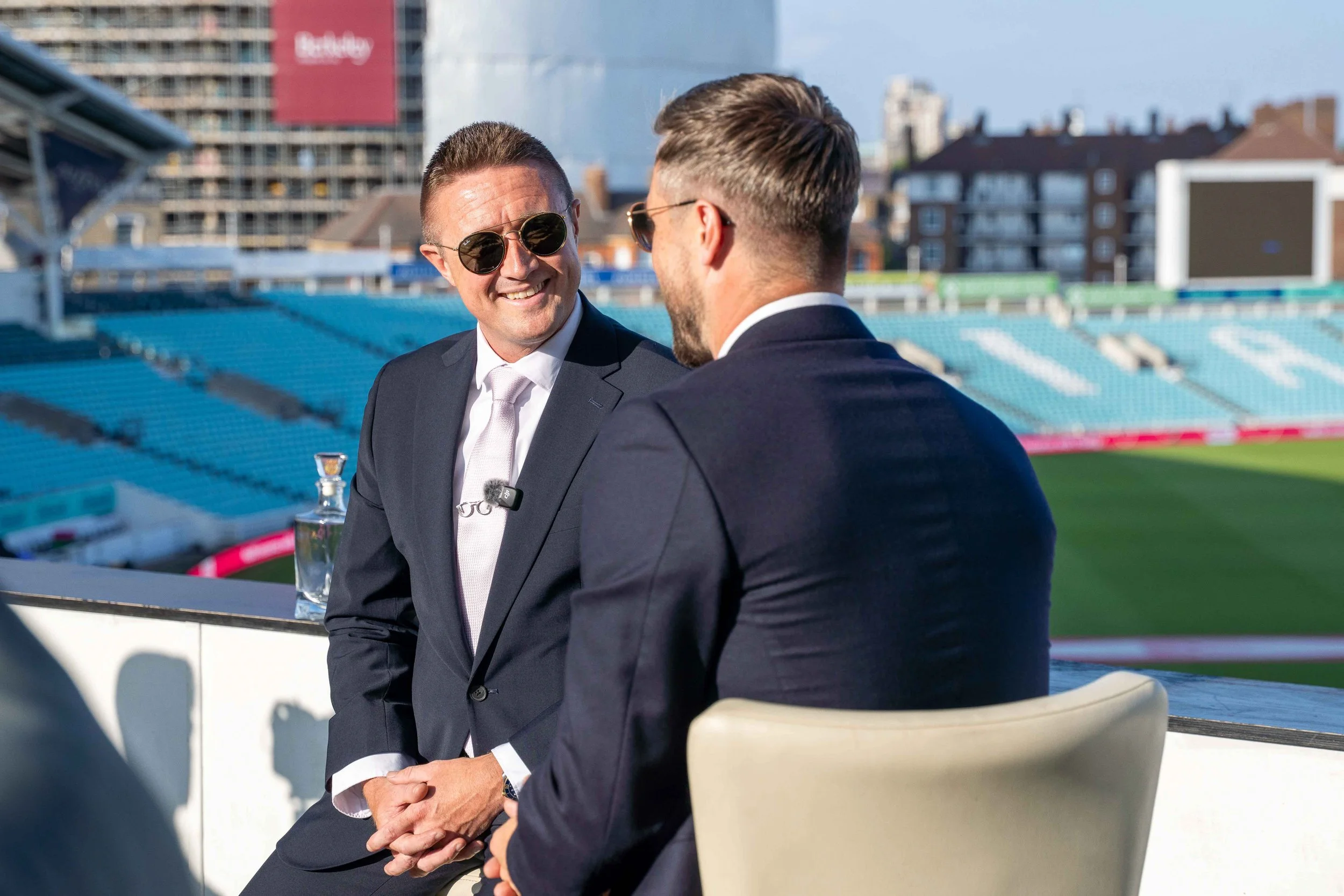
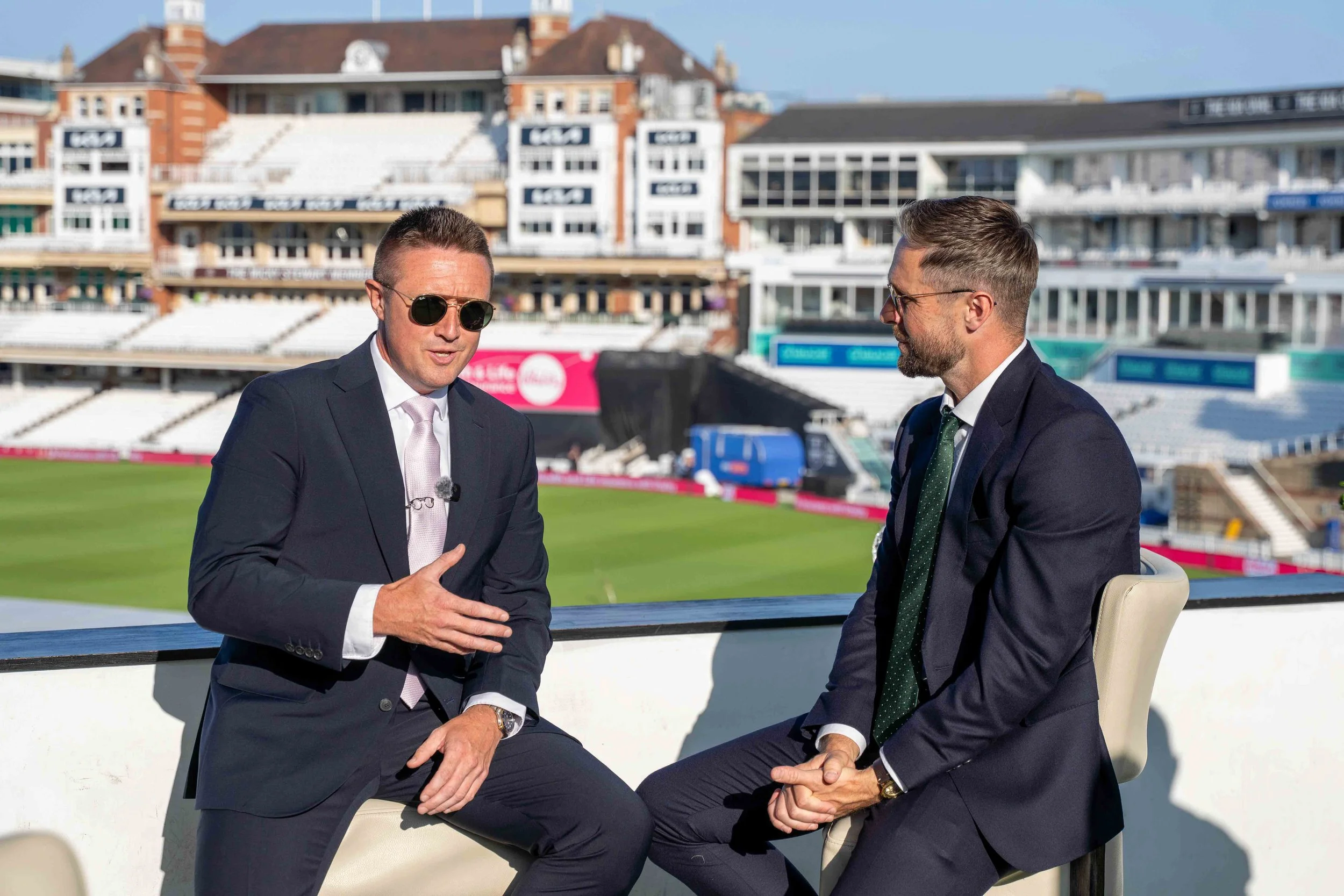
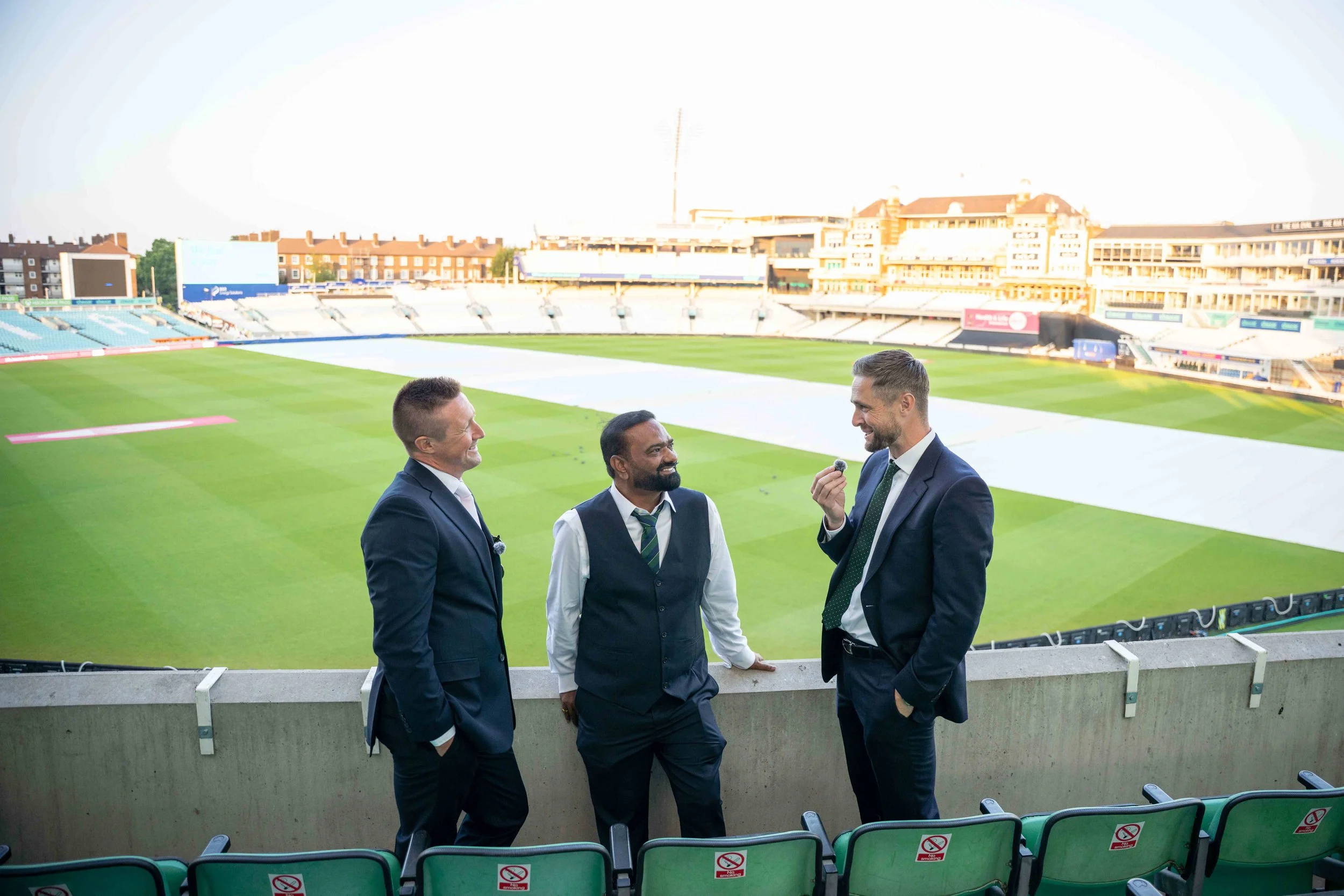
The Viceroy 1977 launch at the Kia Oval demonstrated this clearly. Matthew hosted the live on-stage moderated conversation between founder Rakesh Rathod and Chris Woakes, then moved immediately to filmed interviews on the Oval pitch itself, adapting his approach for a camera format while maintaining the same quality and authority of the live stage work. That versatility across live and filmed formats is a direct product of broadcast training and one of the most practically valuable skills a sports presenter can offer.

The sports partnership moderation dimension
One of the fastest growing formats in live sporting events is the moderated conversation between a world-class athlete and a senior figure from a commercial partner or sponsor organisation. These events require a host who can operate in both worlds simultaneously, bringing sporting credibility to the athlete's side of the conversation and business intelligence to the commercial partner's side, while creating an exchange that is genuinely engaging for the audience watching.
Matthew Walker has moderated partnership events for the Mercedes AMG Petronas Formula 1 Team at the Bellagio Hotel and Casino in Las Vegas, for a senior partnership event at Inter Miami FC's stadium in Miami, and for the Kyle Walker and OPN-MND event at Styal Golf Club in Cheshire. Each of these events required the specific combination of sporting knowledge, business fluency, and moderation skill that only a broadcast-trained sports presenter with genuine cross-sector experience can bring.
What to look for when appointing a host for your sporting event
When choosing a host for a live sporting event, the questions worth asking go well beyond the standard presenting brief. Does the host genuinely know the sport? Can they demonstrate that knowledge in a live interview with a world-class athlete? Have they hosted at venues and events comparable in scale and profile to yours? Can they work across both live stage and filmed formats? And do the sporting organisations they have worked with invite them back?
The answers to those questions will quickly reveal whether a host has the genuine sporting credibility and broadcast experience your event requires, or whether they are a capable generalist who happens to be comfortable in front of a crowd.
If you are planning a live sporting event, sports partnership activation, or filmed sporting content and want to discuss how Matthew Walker can help make it exceptional, get in touch at matthew@thestandoutcompany.com or call +44 (0)207 088 8085.