

International Conference Hosting: What Changes When Your Audience Comes From Across the Globe
An international conference is not simply a domestic conference with a larger guest list. The moment an audience spans multiple countries, cultures, time zones, and languages, the demands on the host change fundamentally. The assumptions that work perfectly well in a single-culture room, assumptions about humour, register, cultural references, levels of formality, and what constitutes a comfortable pace, need to be reconsidered entirely. A host who does not understand those differences will feel it in the room before the first session is over.
Matthew Walker has hosted international conferences, summits, and events across Las Vegas, Miami, Milan, Oslo, and Barcelona, including events at the Bellagio Hotel and Casino, the MGM Grand, Mandalay Bay, and the HPE Suite at the Milano Cortina Winter Olympics. He has moderated conferences with EMEA and APAC delegates in the same room, hosted a live broadcast that reached audiences simultaneously across more than 30 countries, and presented at events where the audience represented every continent. This post draws on that experience to explain what actually changes when your conference goes international and why it matters for the host you choose.
The cultural intelligence that international hosting requires
Cultural intelligence is not the same as cultural awareness. Awareness is knowing that different cultures have different norms. Intelligence is the ability to read a room in real time, adjust your approach accordingly, and make every person in it feel that the event was designed with them in mind rather than simply translated for their benefit.
In practice this means understanding that the level of formality expected of a host varies significantly between cultures, that humour which lands effortlessly with a British audience may not translate to an APAC one, that some cultures expect the host to maintain a clear authority throughout while others respond better to a more collaborative and conversational approach, and that the pace of delivery that feels natural to a native English speaker may need to be adjusted when a significant proportion of the audience is working in their second or third language.
None of these adjustments should be visible to the audience. They should simply feel the result: an event that feels inclusive, well-paced, and genuinely attentive to everyone in the room regardless of where they have come from.

Language and accessibility in a multilingual room
English is the default language of international business conferences, but that does not mean every delegate in the room is equally comfortable working in it. When a significant portion of the audience is listening in their second language, the demands on the host increase considerably. Clarity of delivery becomes more important than ever. Idiomatic language, regional references, and rapid-fire wit that would work perfectly with a domestic audience can create confusion or exclusion in a multilingual room.
A skilled international conference host speaks with absolute clarity without ever sounding slow or condescending. They choose language that is precise and universally accessible without being bland. And they are conscious throughout of the pace and density of their delivery, giving a multilingual audience the space to process what they are hearing without the event ever losing momentum.
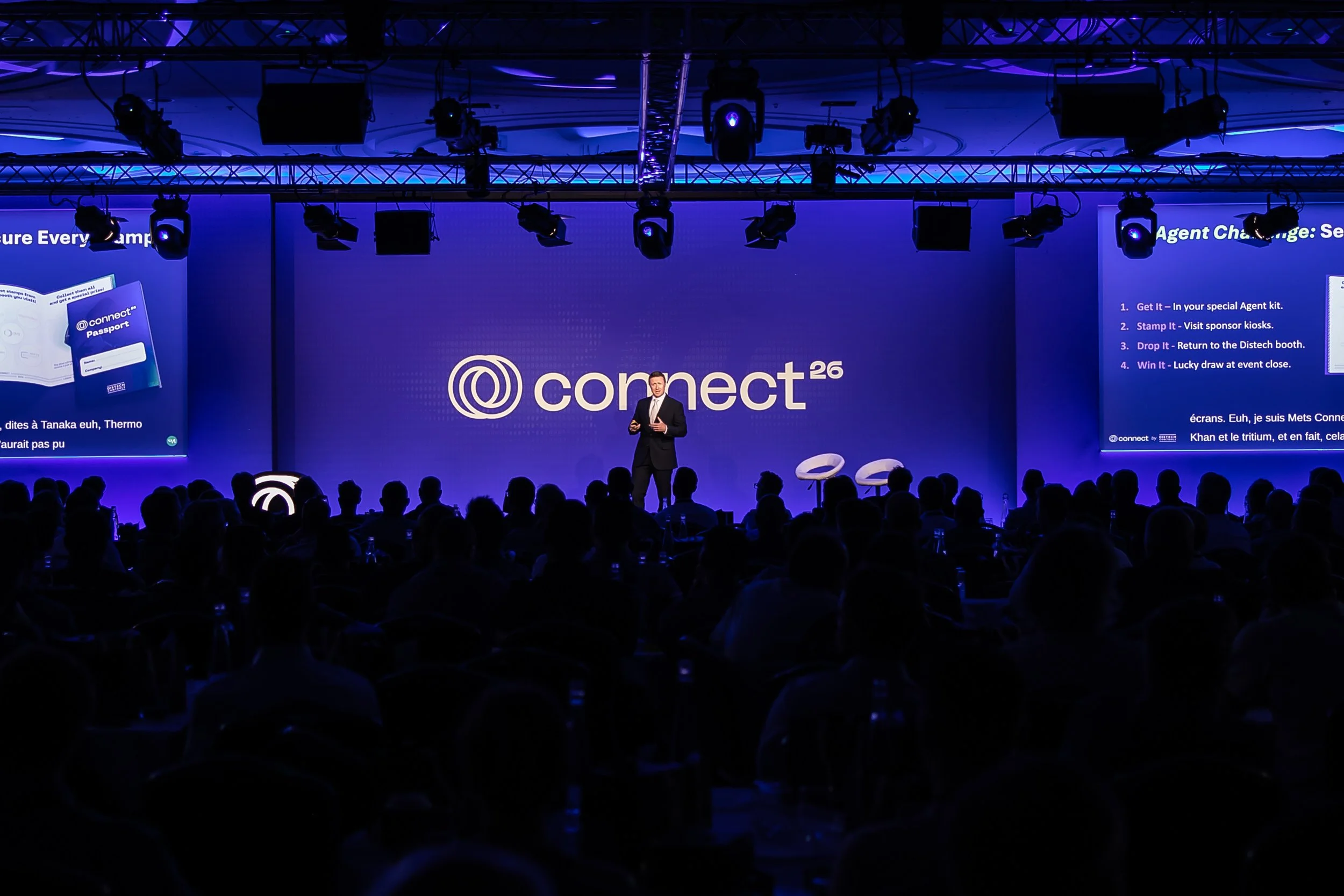
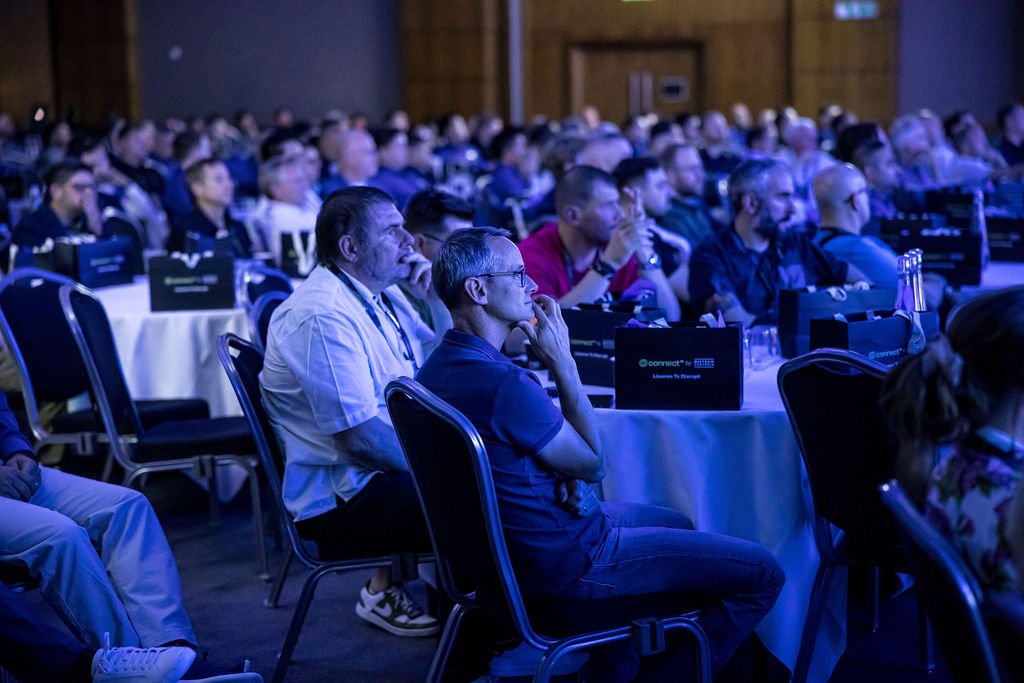
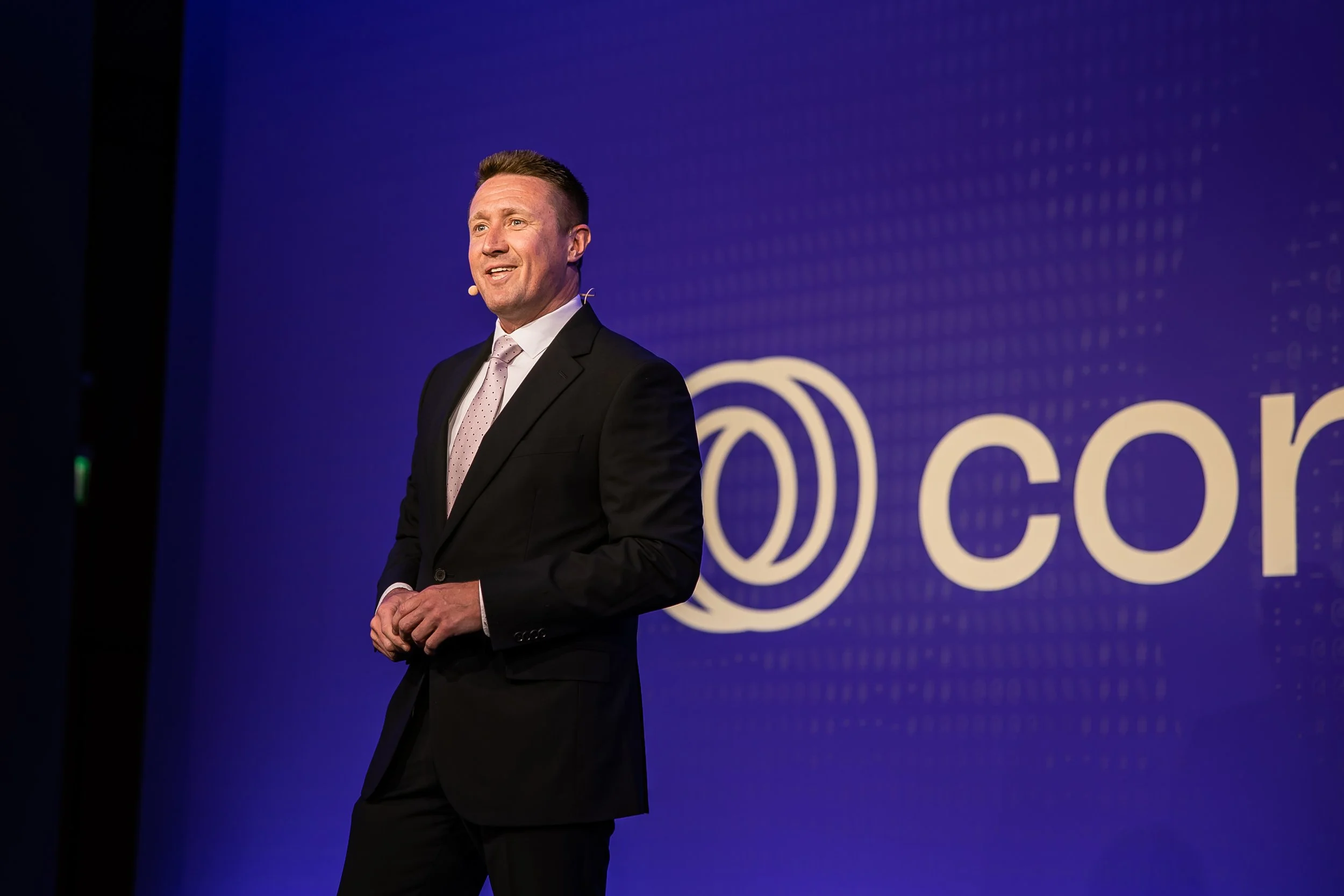
Matthew Walker hosted Connect 2026 for Distech Controls at the Hilton London Metropole, an international partner summit that brought together system integrators and technology partners from across EMEA and APAC. The event featured live translation into multiple languages via delegates' phones, and the hosting approach was calibrated throughout to serve an audience whose relationship with English ranged from native to working proficiency.
The logistics of international events and what they demand from the host
International conferences are logistically more complex than domestic ones, and that complexity creates pressure points that fall disproportionately on the host. Delegates arriving from multiple time zones may be managing jet lag. Technical requirements for live translation add layers of coordination between the host, the production team, and the AV crew. Running orders that look clean on paper become more fluid when they need to accommodate speakers and panellists joining from different locations or presenting through interpreters.
A host who has only ever worked in straightforward domestic environments will feel the weight of that complexity on an international stage. A host who has navigated it repeatedly, across genuinely demanding international productions, brings a composure and adaptability that makes all the difference to how the event feels from the audience's perspective.
Las Vegas: the world's most demanding international event environment
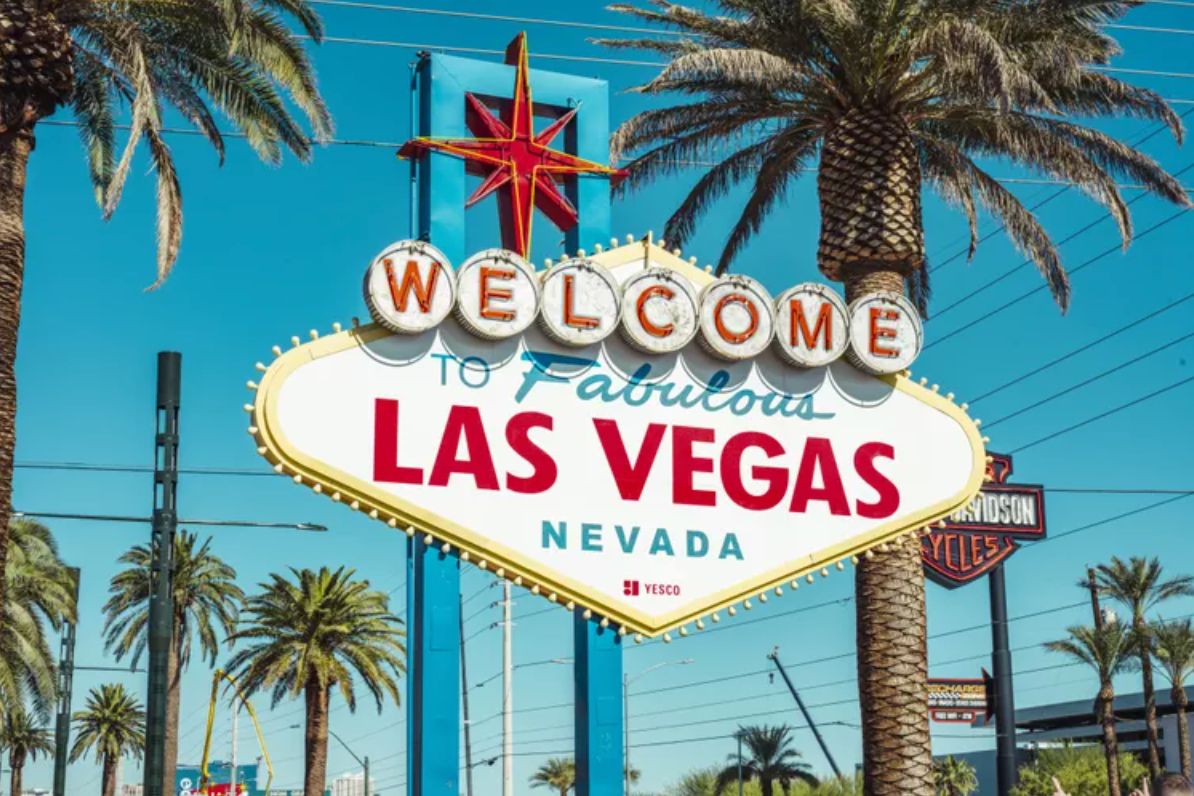
Las Vegas is in a category of its own as an international event destination. The production values are higher, the audience expectations are greater, and the competition for attention, from the city itself as much as from other events, is unlike anywhere else in the world. Hosting a high-profile international event in Las Vegas requires a presenter who can match the scale of the environment and hold an audience that has seen everything.
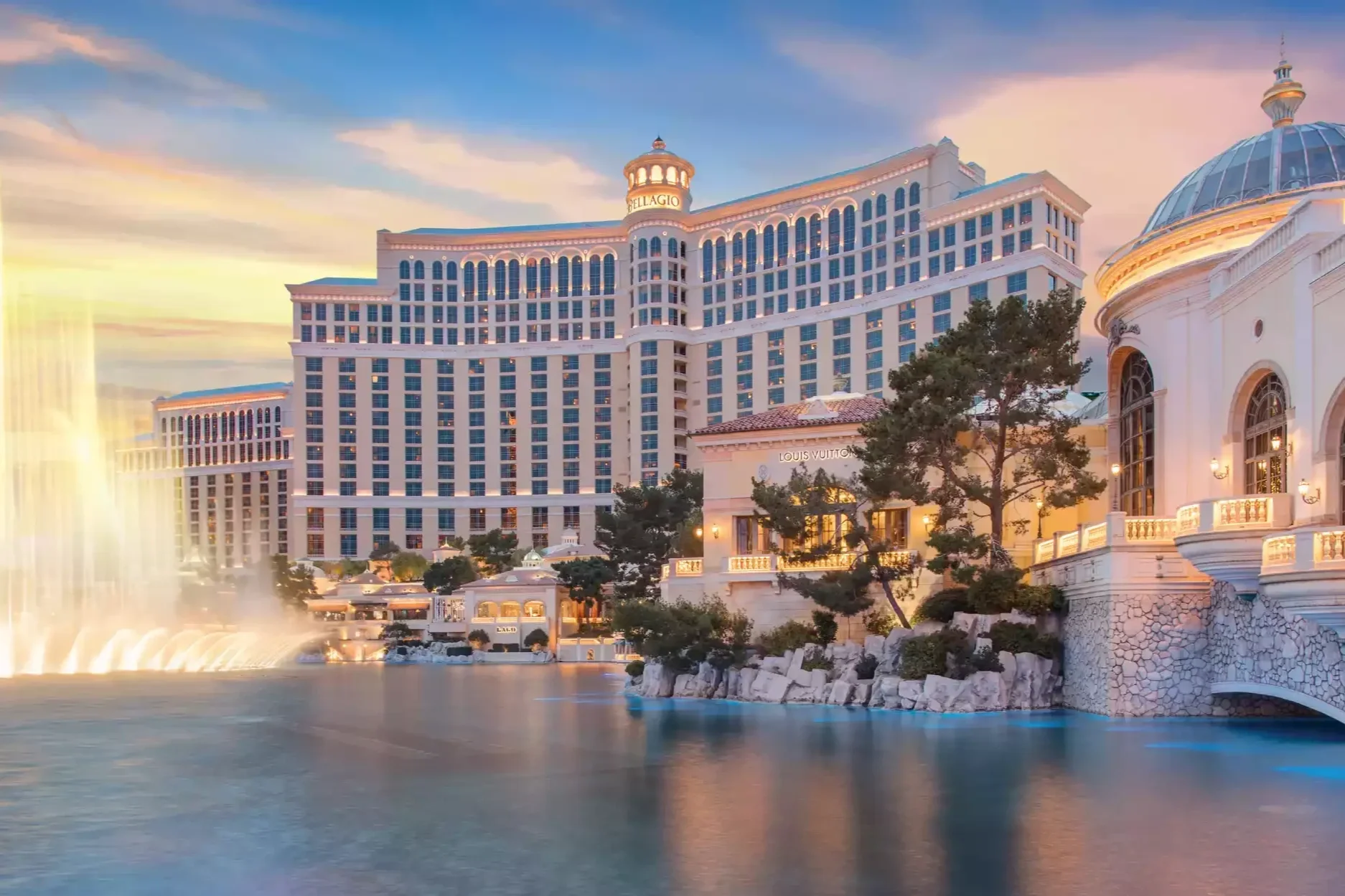
Matthew Walker has hosted high-profile events at the Bellagio Hotel and Casino, the MGM Grand, and Mandalay Bay in Las Vegas. Each of those venues carries its own expectations and its own atmosphere, and each requires the host to bring a level of presence and authority that matches the setting. That experience in Las Vegas specifically is a credential that very few UK-based conference hosts can offer.
The hybrid dimension of international conferences
Many international conferences now run in hybrid format, with in-room audiences in one location and remote participants joining from multiple countries simultaneously. This adds a further layer of complexity that is easy to underestimate. The host needs to actively bridge the gap between the physical and virtual audiences, ensuring that remote participants feel genuinely included rather than simply tolerated, and that the energy and engagement of the in-room experience is communicated effectively to people watching on a screen in a different time zone.
Matthew Walker hosted a live international hybrid broadcast for Dunnhumby from a single London studio, reaching audiences simultaneously across more than 30 countries. That kind of production demands a very specific set of skills that are distinct from both standard conference hosting and standard broadcast presenting, and it is experience that very few conference hosts in the UK can point to at that scale.

What to look for when appointing a host for an international conference
When appointing a host for an international conference, the questions worth asking go well beyond the standard brief. Has the host presented to genuinely international audiences, not just domestic events with a few overseas delegates? Do they have experience in the specific region or regions your delegates are travelling from? Have they hosted in the country or city where the event is taking place? And can they demonstrate the cultural intelligence, linguistic clarity, and logistical adaptability that international events specifically demand?
Matthew Walker's international conference credits span Las Vegas, Miami, Milan, Oslo, and Barcelona, with events at some of the world's most prestigious venues and for clients including Distech Controls, Dunnhumby, HPE at the Winter Olympics, and Anthropic. That breadth of genuine international experience, combined with over fifteen years of broadcast presenting at the highest level, represents a specific and rare combination of skills for organisations planning events that cross borders.
If you are planning an international conference, global summit, or hybrid event and want to discuss how Matthew Walker can help make it exceptional, get in touch at matthew@thestandoutcompany.com or call +44 (0)207 088 8085.