
Moderating AI Panel Discussions: Matthew Walker on Keeping Technical Conversations Accessible to Every Delegate
AI panel discussions are among the most intellectually demanding formats in live events. The subject matter moves faster than almost any other field. The audiences are almost always mixed, combining deep technical experts with senior business leaders who need the strategic picture without the underlying complexity. And the conversations that matter most in an AI panel, the ones about ethics, governance, competitive risk, and the pace of change, are the ones most likely to generate genuine disagreement between panellists who hold strongly opposing views.
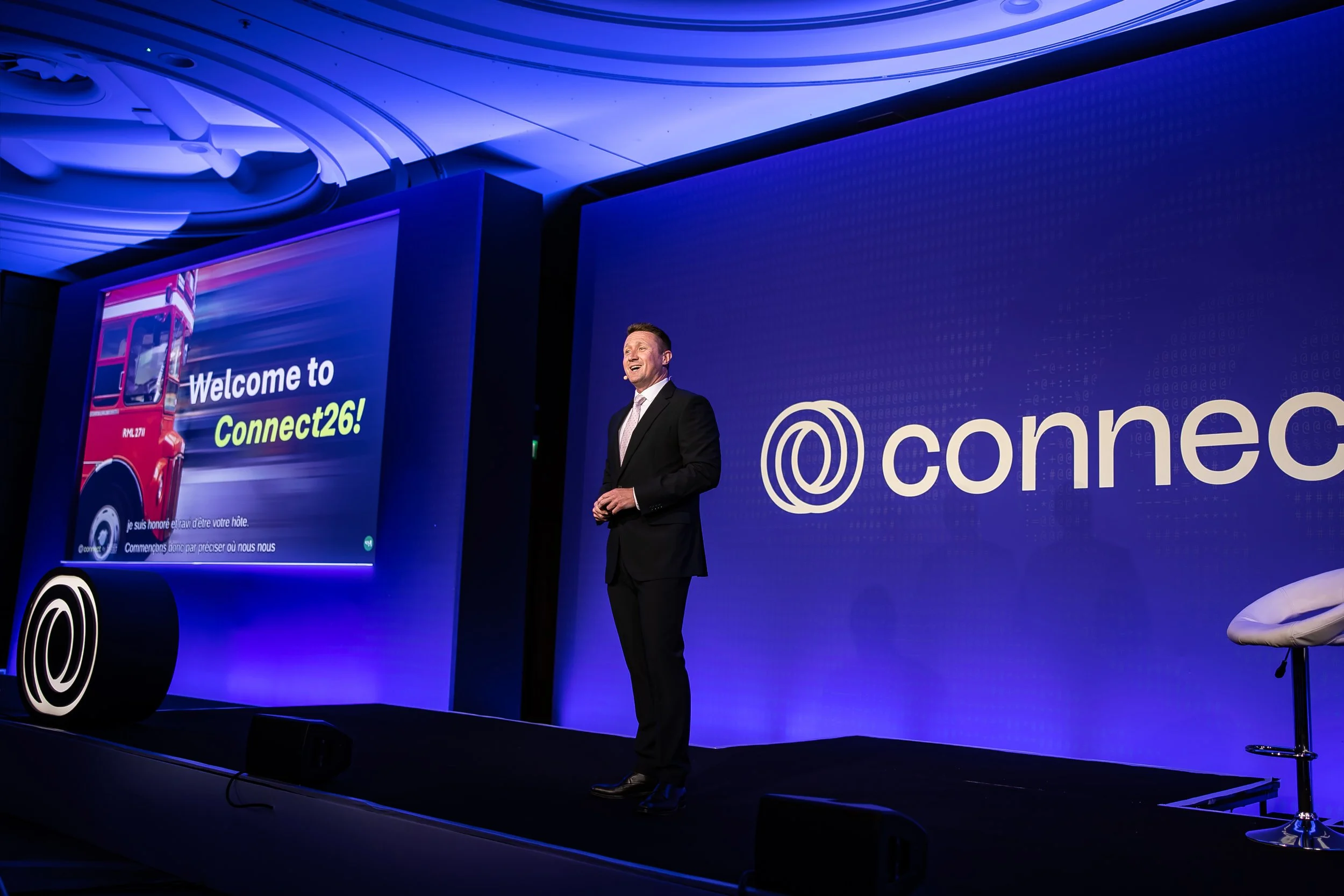
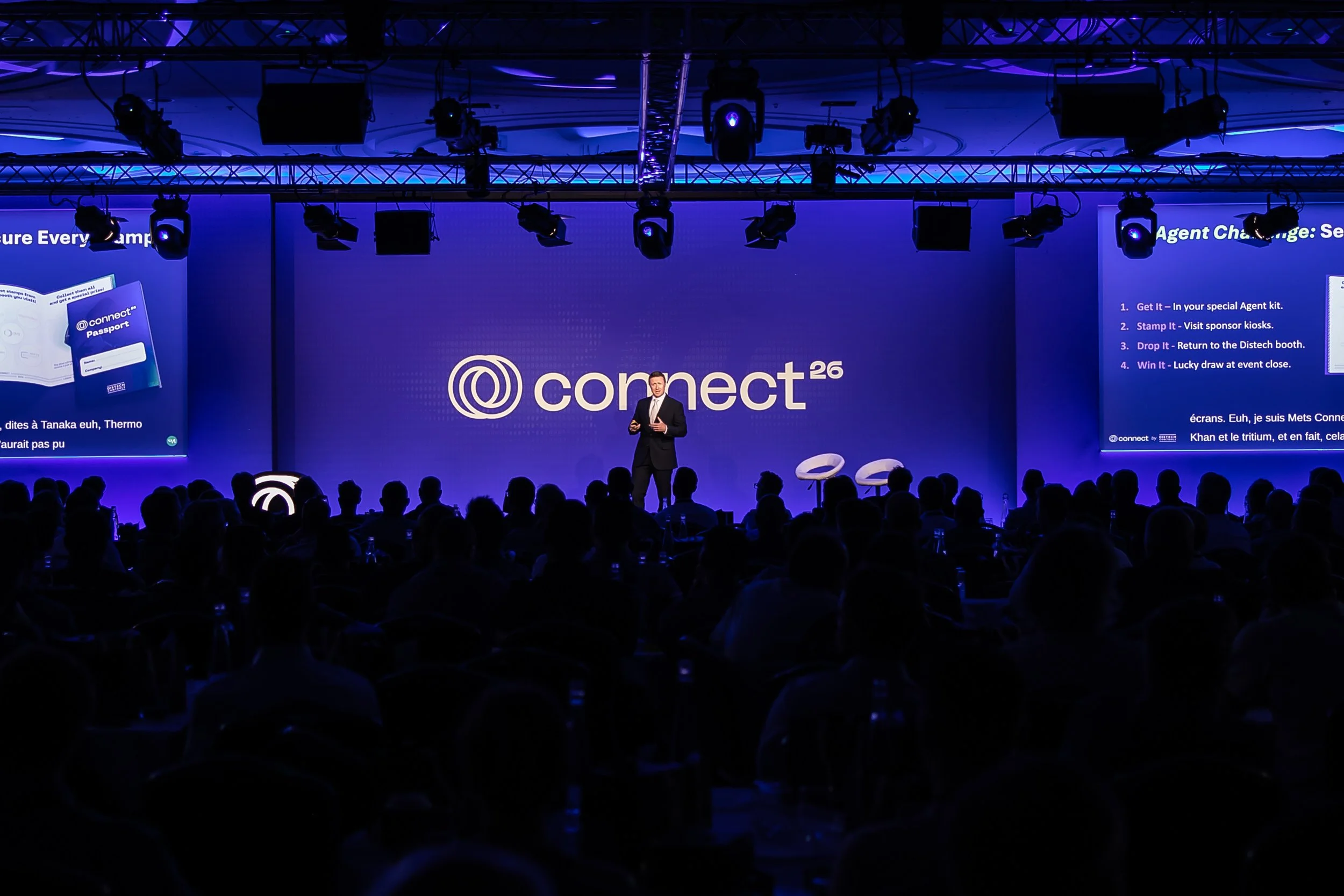
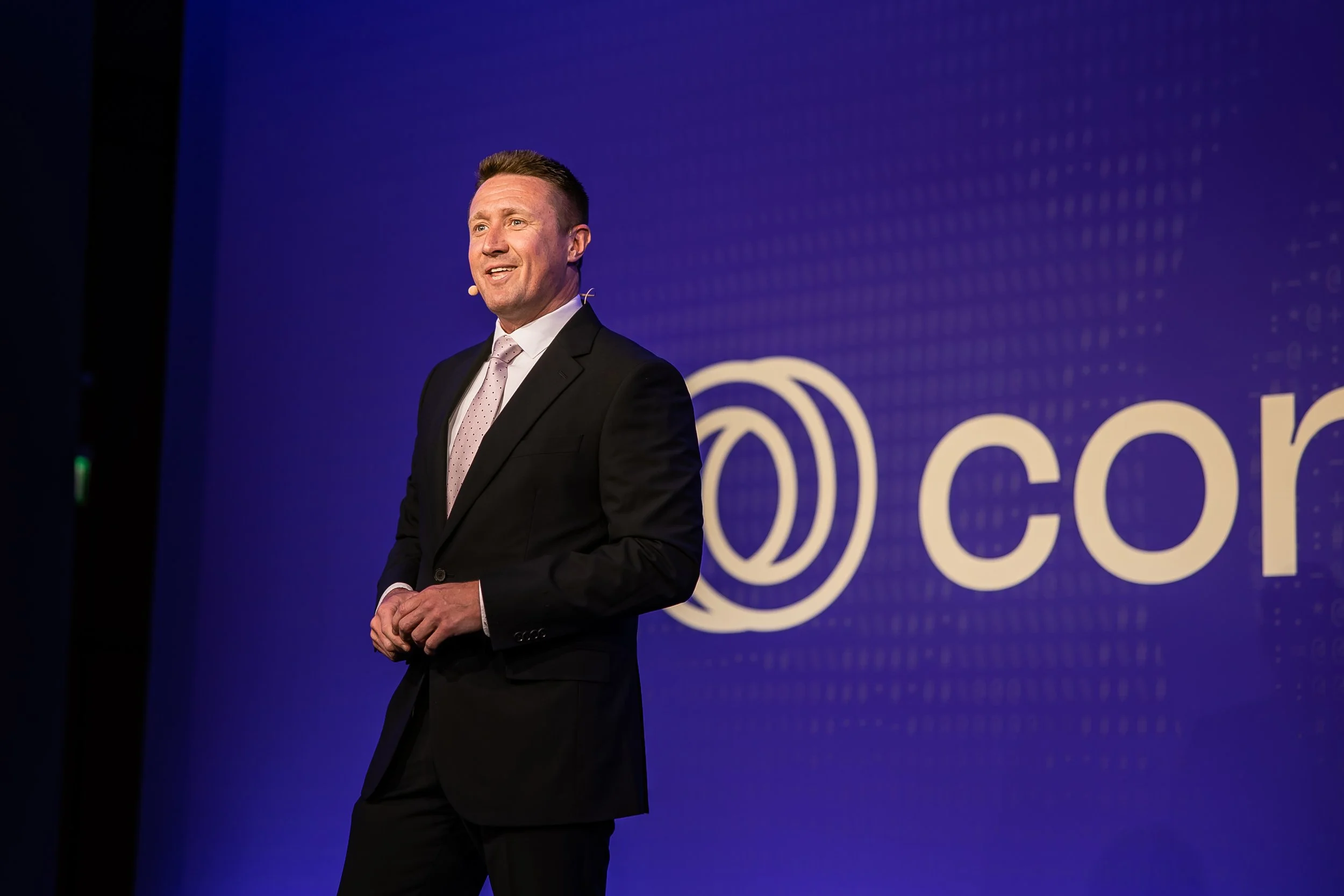
Moderating that kind of discussion well is a distinct skill. It requires intellectual curiosity, genuine preparation, the confidence to redirect a conversation that is losing the room, and the broadcaster's instinct to know when a moment needs more time and when it needs to move on. Matthew Walker has moderated AI panel discussions and technology conferences for clients including Anthropic, the company behind Claude, Dunnhumby, Deloitte, and HPE at the Milano Cortina Winter Olympics. This post draws on that experience to explain what makes AI panel moderation different and what it takes to do it well.
The challenge that is unique to AI panels
Most panel discussions have a knowledge gap between the panellists and the audience. In an AI panel, that gap is often present within the audience itself. A room of 200 delegates at an AI conference might contain twenty engineers who work with large language models every day, fifty senior executives who are implementing AI strategy without a technical background, thirty procurement professionals evaluating AI vendors, and a hundred others at various points along the spectrum between those extremes.
Every one of those people needs to leave the session with something valuable. The engineers need depth and specificity. The executives need clarity and strategic context. The procurement professionals need practical, applicable insight. And the moderator needs to serve all of them simultaneously, without pitching the conversation so high that it loses the majority or so low that it patronises the experts.
That balancing act is the central challenge of AI panel moderation, and it is one that only becomes harder as AI literacy varies more widely across organisations and industries. A moderator who cannot manage it will either alienate the technical experts by oversimplifying or lose the broader audience by letting the conversation become too specialised. Neither outcome serves the event.
Preparation is more intensive than any other format
The preparation required for an AI panel discussion is significantly more intensive than for most other conference formats. The subject matter changes rapidly, which means a moderator who researched the topic three months ago may arrive with an understanding of the landscape that is already partially out of date. Staying current with developments in AI, across the specific sectors relevant to each event, is a continuous commitment rather than a pre-event briefing exercise.
Beyond subject matter research, preparation for an AI panel involves understanding the specific positions and expertise of every panellist, identifying the points of genuine tension between them, and building a line of questioning that is designed to surface that tension productively rather than simply inviting each panellist to present their perspective in turn. The most valuable AI panel discussions are the ones where the audience hears something they did not expect. That never happens by accident. It happens because the moderator has done the work to know where the fault lines are and has the skill and confidence to push on them at the right moment.
The translation skill that separates great AI moderators from capable ones
The single most valuable skill in AI panel moderation is translation. Not between languages but between registers, between the technical and the strategic, between the specific and the general, between the expert's answer and the broader audience's need to understand what it means for them.
When a panellist gives an answer that is technically precise but practically opaque to two thirds of the room, the moderator's job is to reframe it in real time. Not to simplify it to the point of inaccuracy, which insults both the panellist and the expert members of the audience, but to find the analogy, the context, or the practical implication that makes the point land for everyone. That is a broadcaster's skill as much as a facilitator's, and it is one that Matthew Walker has developed across fifteen years of communicating complex subjects to mixed audiences in live television and live event environments.

Managing the ethical and controversial dimensions of AI discussions
AI raises questions that do not have comfortable answers. Job displacement, algorithmic bias, data privacy, the concentration of AI capability in a small number of organisations, the pace of regulation relative to the pace of development: these are genuinely contested issues on which well-informed, well-intentioned people hold strongly opposing views. An AI panel that avoids these subjects in the interest of keeping everyone comfortable is an AI panel that delivers very little of lasting value.
A skilled moderator creates the conditions in which these conversations can happen productively. That means being willing to introduce a perspective that is missing from the panel's consensus, to push back on a claim that deserves to be challenged, and to hold competing views in the room simultaneously without letting the discussion become a debate that goes nowhere. It also means knowing when a controversial exchange is generating genuine insight and when it is generating heat without light, and redirecting accordingly.

The hybrid dimension of AI conference panels
A significant proportion of AI conferences now run in hybrid format, with in-room audiences and remote participants joining from multiple locations and time zones. Moderating a hybrid AI panel adds a further layer of complexity: the moderator needs to actively ensure that remote participants are given equal weight in the discussion, that questions from remote audiences are handled with the same care as questions from the room, and that the energy and engagement of the conversation is maintained across both physical and virtual environments simultaneously.
Matthew Walker's experience moderating international hybrid events, including a live broadcast to over 30 countries for Dunnhumby from a single London studio, gives him specific and tested expertise in this format. The skills required to keep a hybrid AI panel discussion alive and engaging are not learned in a single engagement. They are developed across repeated experience in high-stakes live environments where the margin for losing the audience is very small.
What organisations planning AI panels should look for in a moderator
When selecting a moderator for an AI panel discussion, the questions worth asking go beyond the standard presenting brief. Does the moderator have genuine familiarity with the AI landscape, not just general technology awareness? Can they demonstrate experience moderating technically complex discussions in front of mixed audiences? Have they worked with organisations at the forefront of AI development? And do they have the broadcasting instinct to translate complex ideas in real time without losing either the experts or the broader audience?
Matthew Walker has moderated AI and technology panel discussions for clients including Anthropic, the company behind Claude, alongside a broader portfolio of conference and summit work across technology, finance, energy, and professional services. That experience, combined with over fifteen years of live broadcast presenting across Formula 1, BBC, ITV, Channel 4, and Amazon Prime Video, represents a specific combination of technical fluency and live event expertise that is genuinely rare in the UK moderation market.
"Matthew is the safest pair of hands in the business." Jordan Walker, Connectin Events. If you are planning an AI conference, technology summit, or panel discussion and want to discuss how Matthew Walker can help make it exceptional, get in touch at matthew@thestandoutcompany.com or call +44 (0)207 088 8085.